

FRACTIONAL CHIEF OF STAFF & COMMUNICATIONS STRATEGY
Senior-level support, embedded in the work.
Winters Co. is for the leaders who need clarity at the center of chaos.
You're moving fast and your organization needs to keep up. I partner with tech executives to navigate complexity, drive alignment, and make sure the decisions you've made actually land, so you can stay focused on what only you can do.
WHAT I DO
Resolve. Repair. Build.
Every engagement follows the same logic: The immediate problem gets solved and we keep going. The goal is to reduce the fires you’re fighting over time, not just a better response to the current one. That applies whether the problem is operational, communicative, or both, which it usually is.

Resolve.
Get embedded fast to address the immediate problem with clarity and speed. This is where most engagements start; something is complicated, urgent, or stuck.
-
I was onsite supporting a client's official content platform during the first day of a major industry event. Day One was Launch Day, the single highest-traffic, highest-stakes day of the year for that platform. The site went down entirely. Customers, partners, media, and investors all hit an error page, with the business depending on that content being live and accessible.
My client was unreachable, so I moved without waiting on them, but not alone. I stayed transparent about what was and wasn't working, kept the right stakeholders informed in real time, and connected the people who could actually solve each piece of the problem, including the site administrator I worked with directly to investigate root cause. Together we traced the failure to a specific asset upload, pulled it, and rolled the site back to its last working version. The site was live again by end of day. It was the fastest path back to stability, even though it meant leaving one piece unresolved until the following day, when it was fixed cleanly by the colleague who owned that asset.

Repair.
Find the source of the friction and fix not just the symptom, but the underlying break. Naming it clearly is what makes the resolution stick and frees up your resources to drive growth.
-
A company was handling a string of security incidents, and the friction wasn't contained to a single event — it was that communications outside of technical teams wasn't built into the security response process at all. Response timing, customer and employee messaging, and reputational risk were being improvised under pressure every time by people who didn’t have the expertise.
Instead of only drafting reactive statements, I helped redesign the security response process itself, defining when and how communications engages, setting notification windows, and building reactive statement readiness ahead of need. I named the real problem and fixed the process, not just the symptom. Communications is now a standing part of incident response, reducing risk across future incidents rather than one at a time.

Build.
Strategic initiatives succeed or fail based on what's built around them - the systems, language, and structure. The work compounds and continues to deliver over time.
-
Corporate communications and the field sales and marketing teams weren't operating from the same playbook and it was chaotic. Each was creating its own messaging and initiatives without central alignment. The result was fragmented, sometimes contradictory messaging reaching customers, media, and partners, and frustration for employees and leadership trying to make sense of it.
I built a simple alert template and trained both corporate and field teams to use it — submitting it in advance of any activity, covering key messaging, key contacts, and available assets, so everyone participating in a business moment was working from the same information. The template became the standard way initiatives got aligned before they went out. The payoff compounded: less walking back of messaging after the fact, fewer reactive statements and cleanup efforts, and stronger, more coordinated amplification of key business moments across the company.
WHO I WORK WITH
Winters Co is built for executives who are technically excellent and organizationally stretched.
I work with Vice Presidents, Senior Vice Presidents, and Presidents at growth-stage, late-stage, and mid-market tech companies navigating scale, change, or complexity without the operational and communications infrastructure to match.

The leaders I work with best are decision-makers who need a partner, not an order-taker. My job is to give you the clarity you need to make the right call, hold the context you don't have time to hold, and make sure the work lands the way you intended it to. That works best when I'm embedded at your level, not advising from a distance.
We might be a fit if:
→ You're running fast and the organizational infrastructure hasn't caught up
→ You're in or about to enter a high-stakes moment: acquisition, reorg, leadership change, or rapid scale
→ You need someone who can work directly with you, not through layers
→ You want embedded support, not a consultant who delivers a deck and disappears
SERVICES
Two ways to work together

Whether you need an operational partner embedded in your day-to-day or a communications strategist for a high-stakes moment, the engagement is hands-on, direct, and built around what you actually need.
01
Fractional Chief of Staff
For when you're building something new — a cross-functional team, a shared process, a clearer set of priorities — and need a partner who can hold the operational complexity while you lead. Not a project manager and not an admin. Someone embedded at your level who can see the whole board.
Retainer-based · 20–60 hours/month
02
Communications Strategy
There are moments in business where communications isn't a nice-to-have; it's the difference between a change that lands and one that brings it all to a screeching halt. Fixed engagements scoped around M&A, reorgs, leadership transitions, crisis and incident response, executive positioning, and change management, internal and external.
Project-based · Scoped to engagement
HOW IT WORKS
Most engagements don't fail because the strategy was wrong.
They fail because no one was holding the context. No one tracking what was decided, who agreed to what, where things are getting stuck, and what needs to happen next across an organization. That's the gap I fill with Winters Co.
Here's what that looks like in practice.
01
Fractional vs. full-time
Some executives need steady operational rhythm. Day-to-day execution, standing cadences, someone embedded in the business long-term. That's a full-time hire.
Others need someone to walk into a complicated moment, get oriented fast, stabilize what's unstable, and build the structure that lets the organization run on its own. That's where I do my best work.
02
Getting in fast
The first priority is understanding the landscape before touching anything. That means conversations. Not just with the executive who brought me in, but with the people doing the work, the stakeholders in adjacent teams, and anyone whose cooperation will matter later. I'm mapping who's who, what their priorities are, where they feel stuck, and what's been tried before. What failed before and why is often more useful than what's working now.
By the time I'm orienting people toward a shared goal, I already know what it will take to get each of them there.
03
Building while embedded
I don't build process until I understand how people actually work. Tools, relationships, and existing workflows come first. Where are things breaking down? What's the real source of friction: unclear ownership, missing infrastructure, competing priorities?
Once that's mapped, I can design something that fits — a structure built around how the organization actually moves. That usually means a cross-functional working model, clear documentation, and agreed-upon cadence, so momentum doesn't depend on one person holding it all in their head.
04
Ending without unraveling
A clean exit is designed from the beginning, not figured out at the end. As execution stabilizes, I'm already identifying who owns what next and building their capability, not just their task list. That means shadowing, real-time collaboration, and feedback loops calibrated to how that person learns, not a handoff document no one reads.
The goal is that by the time I step back, the work is running because the right person is running it in the best way possible, not because I'm still on call.
ABOUT
Winters
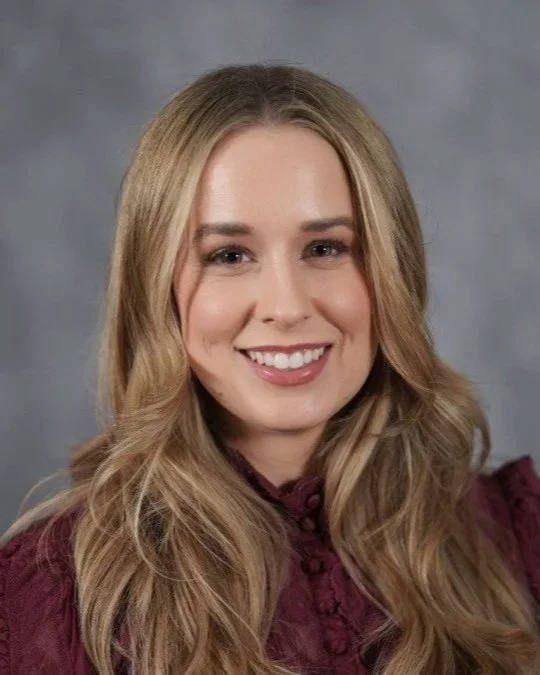
Some executives hire a Chief of Staff. Others bring in a communications consultant. At Winters Co., I do both, knowing the most impactful work tends to happen where those two things overlap.
I started Winters Co. because the hardest problems organizations face rarely fit cleanly into one lane. An acquisition closes and no one knows what to tell employees. A reorg is decided at the top and lands badly at every level below it. A security incident escalates and the internal response is slower than the external one. These problems aren’t purely communications or operational. They're both and require someone who can hold each thread at the same time.
I'm Amanda Winters Cheung. I've spent 15 years in communications, with the last 7+ working directly with and for senior executives at technology companies. That work included leading communications strategy for major strategic initiatives across company growth and transformation, communications architecture across multiple acquisitions, crisis communications inside active security incidents, six CEO transitions across four companies, and building and transferring internal communications functions at organizations mid-change. I’ve reported directly to C-suite leadership, advised at the board level, and owned end-to-end narrative for executive-level events.
Organizations in motion need someone who understands what's happening operationally, can translate it clearly at every level of the business, and knows how to build the systems that make the next transition less chaotic and disruptive than the last one.
That's what I do.
GET IN TOUCH
Let's find out if we're a fit.
No pitch decks and no pressure. If something here resonated, reach out and we'll have a direct conversation about what you're working on and whether I can help.
Thank you for your interest in Winters Co.